
“But feelings can’t be ignored, no matter how unjust or ungrateful they seem.”
Anne Frank
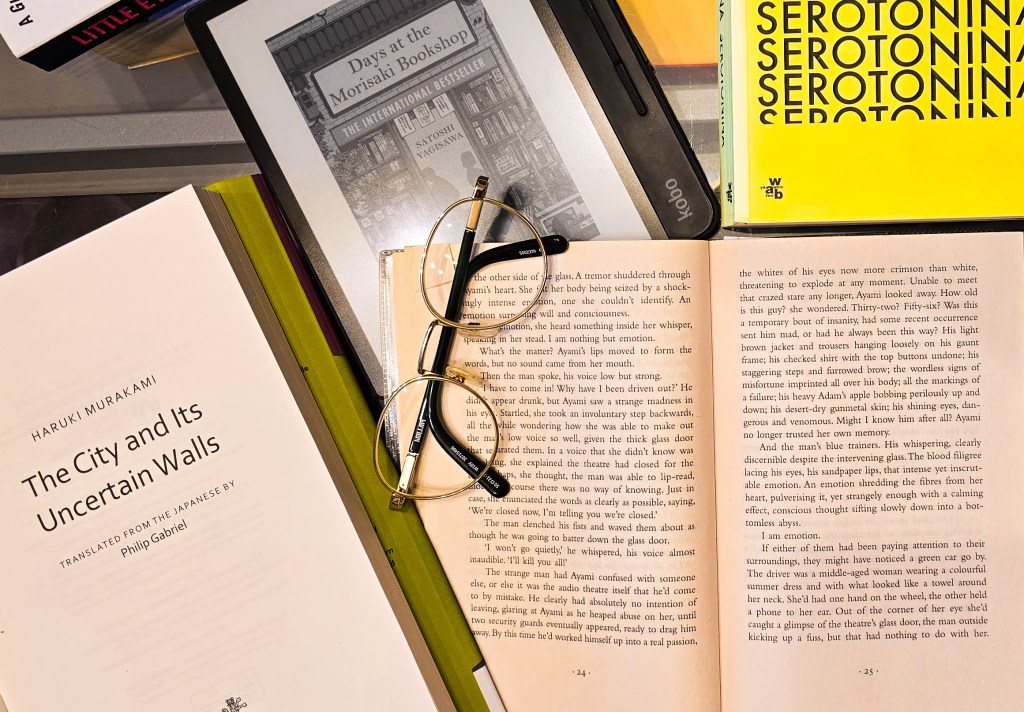
Emotions are the domain of human beings. They guide our lives, influence our opinions and never go hand in hand with logic. We often have them written on our faces, but we are just as likely to hide them. Emotions, from a scientific point of view, “arise as a result of the activation of specialised neuronal populations in different parts of the cerebral cortex, especially in the frontal cortex, such as the amygdala, ventral striatum, caudate nucleus, etc”. Endorphins give us a rush of happiness, dopamine stimulates pleasure, adrenaline makes us ready to run or fight, and too much testosterone causes aggression. But doesn’t our heart beat faster when we’re afraid, our cheeks flush with shame, and those butterflies in our stomachs? ….
The sensitivities accumulated over the years create a person’s future as an individual arrangement of feelings collected and glued together. Emotions influence our judgement of situations and reap a harvest of consequences. Feelings can be simple, such as joy, hope, fulfilment, delight, but also fear, sadness, grief or anger. They can also be complex, when we feel curiosity, indecision, indifference or desire. The psychologist Robert Plutchnik belives that human can experience even over 34000 differen kind of emotions (what the…?!).
Women are fundamentally emotional. We read the world around us with our whole body and soul. We share our feelings and absorb those of others like a sponge. We go to extremes and create our daily lives based on our impressions. The protagonist of Michel Houellebecq’s Serotonin perceives a woman’s love in this way: ‘Love is a creative, tectonic force, female love is one of the most shocking natural phenomena (…), it is a spectacle to be watched with a sense of terror, it is an energy on the scale of an earthquake or a tsunami, of another universe, with her energy a woman creates a whole new world (…). In any case, the woman gives herself completely to the task, consumes herself in it and devotes herself to it (…) with all her body and soul, anyway, for her this difference between body and soul is not very important’.

From childhood, we create our own emotional image by looking at our loved ones. As we can read in ‘I want to die but I want to eat tteokbokki’ by Baek Sahee, ‘the fairy tales we read as children are very one-dimensional. There are good people and bad people in those stories. But in the books adult read, it becomes hard to divide up characters into absolutely good and bad people you learn to look at a person as a whole’. As we grow up, our emotions become more complex, we start to name them and give them meaning and control. We ‘simply acknowledge the fact that we are independent individuals’ Read on, everyone sees the world differently. Some see the world through rose-coloured glasses, others see their surroundings in dark colours and some of us see our surroundings in shades of grey.
It doesn’t matter what emotions drive you, what matters is that they give flavour to life. Is it possible to live without emotions? Impossible! As the protagonist of Serotonin writes at one point in his life, he describes his state of being without desires: ‘In any case, I felt no desires whatsoever, which many philosophers – that was my impression – find an enviable state; Buddhists remain on the same wavelength. Philosophers, on the other hand, like all psychologists, consider such a lack of desire to be pathological and harmful to health’. Desires are an intrinsic part of the emotions. We desire peace, love, power, tenderness; the impulses they give us to feel, to experience, to absorb, to breathe.
On the other hand, excess and insufficiency of emotions can be overwhelming like a dream in the hot summer in Bae Suah’s Untold night and day: „It was the time of the year when sleep was stretched thinnest like oxygen at high altitude. Yet it was also a time governed by a colloid of dreams in which gravity and density were most intense.”
Let us remember that „people are like a breath; their days are like a fleeting shadow”, as the spirit of Koyasu says, quoting the Bible in a conversation with the main character. Sometimes it is worth surrendering to the flow of life and not hesitating to accept that we are beings full of all kinds of emotions, which will not always give us wings, but will teach us to accept our own inner selves.


“I am emotion”
Yours L.

 another pile of books
Leave a comment